
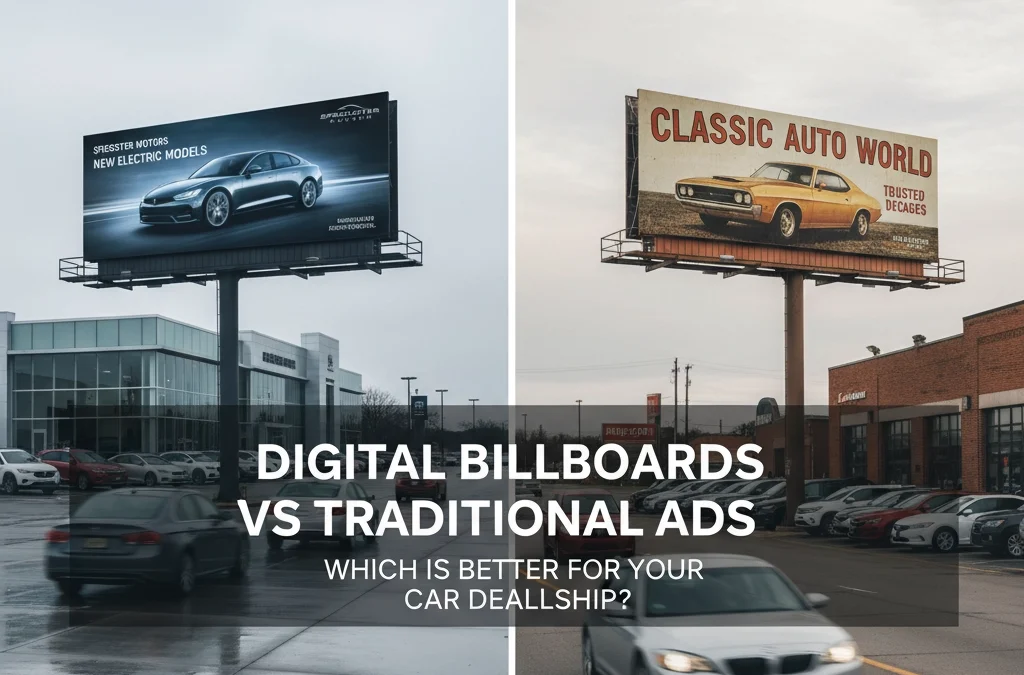
Hello automotive world! Whether you're running a car dealership, manufacturing parts, managing repair shops, or working anywhere in the auto industry, you've probably wondered about the best way to get your message out there. Today we're breaking down digital billboards versus traditional advertising to help you make smart choices for your business.
The short answer? Digital billboards are winning the race, but let's look at why.
What Makes Digital Billboards Different
Digital billboards are like having a giant TV screen that you can change whenever you want. Instead of printing new signs every time you have a sale or new inventory, you just update the content from your computer.
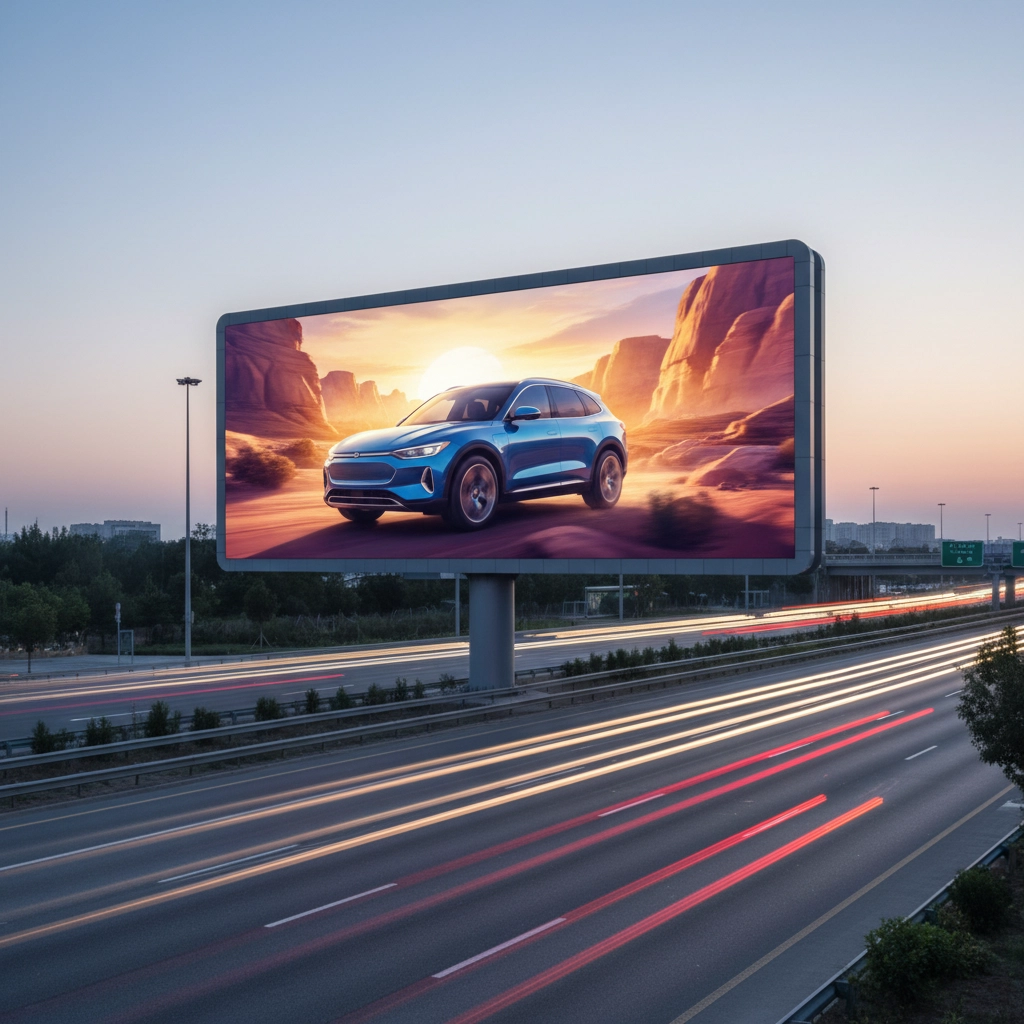
Think about it this way – if you're a car dealer and you just got a shipment of the new 2026 models, you can have them advertised on your billboard within minutes. No waiting for print shops, no installation crews. Just instant updates that keep your message fresh.
The numbers don't lie either. Studies show that people remember digital billboard ads 55% better than traditional static ones. That's a huge difference when you're trying to get customers to remember your dealership name or that special financing offer.
The Power of Real-Time Updates
Here's where digital really shines. Let's say you're having an unexpected slow day at your dealership. With a digital billboard, you can push out a flash sale message in the afternoon to drive traffic for the evening. Try doing that with a traditional billboard – you'd need days or weeks to make it happen.
Auto repair shops love this flexibility too. When they're slower than usual, they can advertise quick oil change specials. When they're busy, they can promote their more profitable services like brake work or transmission repairs.
Traditional Advertising Still Has a Place
Now, traditional advertising isn't completely dead. Static billboards, newspaper ads, and radio spots still work in certain situations.
Traditional methods give you that consistent presence. Your message stays the same, day after day, which can be good for brand recognition. Some people also trust traditional advertising more – especially older customers who might be your target for luxury vehicles or classic car services.
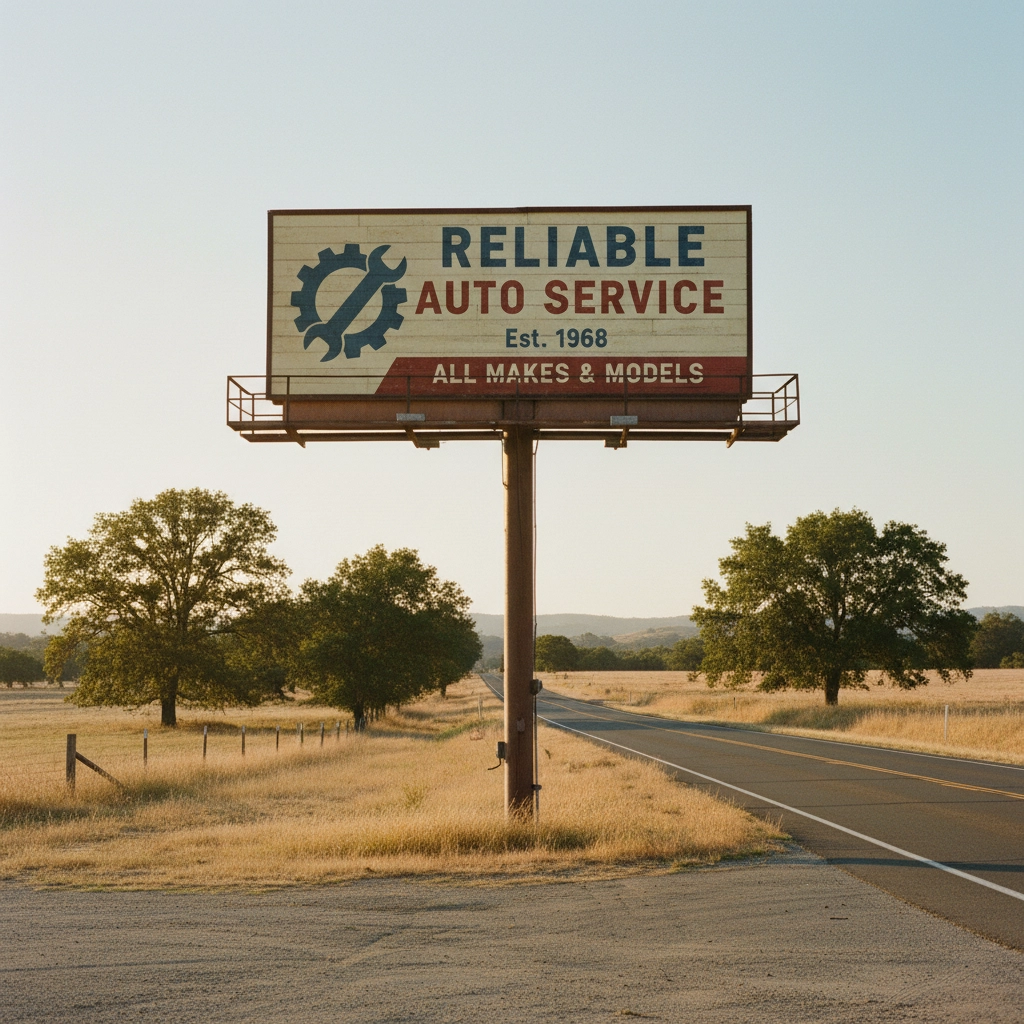
Traditional advertising works best when you have a simple, unchanging message. Something like "Joe's Auto Repair – 30 Years of Trust" doesn't need to change weekly. It's about building that steady brand presence over time.
The Cost Reality Check
Let's talk money. Traditional billboards seem cheaper upfront, but when you add up all the costs over time, digital often wins.
With traditional advertising, every change costs money. New design, new printing, installation crews, removal of old materials – it adds up fast. Plus, if your ad isn't working, you're stuck with it until the contract ends.
Digital billboards let you test different messages quickly. Not getting results with your current ad? Change it tomorrow and try something new. This flexibility means you can optimize your spending instead of throwing good money after bad ads.
Who Wins in Different Scenarios
Choose Digital When:
- You need to showcase changing inventory
- You want to target specific times of day
- Your budget needs to work harder
- You need quick response to market changes
- You want to track what's working
Stick with Traditional When:
- Your message never changes
- You're targeting older demographics
- You need simple, consistent branding
- Local regulations limit digital options
The Automotive Industry Advantage
Here's something interesting – the automotive industry is perfect for digital advertising. Cars, trucks, motorcycles, parts – these all change constantly. New models come out, inventory shifts, prices fluctuate with market conditions.
Manufacturers can promote new releases instantly. Parts distributors can advertise what's in stock. Repair shops can adjust their messaging based on seasonal needs – winter tire service in November, AC repair in July.
Even driving schools and training programs benefit. They can promote different courses, update class schedules, or highlight success rates in real time.
Making the Smart Choice for Your Business
The best approach for most automotive businesses is a mix of both. Use digital billboards for your changing promotions, inventory updates, and targeted campaigns. Keep some traditional advertising for consistent brand building.
Start small with digital. Pick one high-traffic location and test it for a few months. Track your results and see how customers respond. Most businesses find that the flexibility and performance of digital billboards quickly prove their worth.
Beyond Just Advertising
Here's where things get interesting. At Drive Fear Free, we're seeing automotive businesses use digital displays for more than just traditional advertising. Some are sponsoring esports pods and driving simulators in high schools, getting their brand in front of the next generation of drivers, mechanics, and automotive professionals.
These kinds of community partnerships create lasting relationships while supporting education. It's advertising that actually helps people learn valuable skills for automotive careers – from driving to welding to diagnostics.

The Technology Factor
Digital billboards connect with other marketing tools in ways traditional ads can't. You can sync them with your social media campaigns, coordinate with radio ads, or even connect them to your inventory management system.
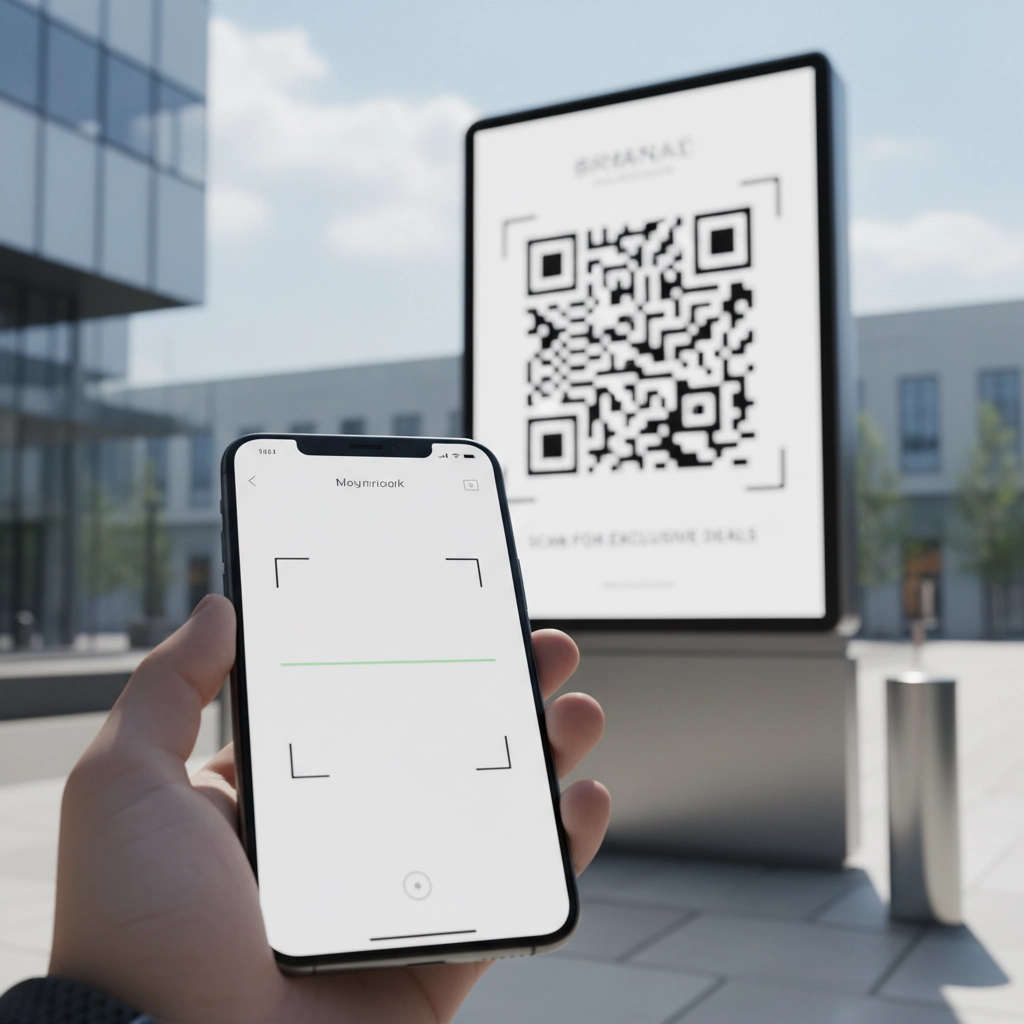
Some dealerships are experimenting with QR codes on their digital billboards that take people directly to their website or specific vehicle listings. Try doing that with a painted sign!
The data you get from digital campaigns also helps you understand what works. You can see which messages get the best response, what times of day are most effective, and even how weather affects your advertising performance.
Simple Next Steps
Don't overthink this decision. Start by looking at your current advertising costs and results. If you're spending money on ads that you can't change or track, digital billboards probably make sense for your business.
Contact local digital billboard companies and ask about their automotive industry experience. Many offer flexible contracts that let you test the waters without huge commitments.
Most importantly, think about your customers. Are they the type who respond to flashy, changing displays? Or do they prefer simple, consistent messaging? Your audience should drive your decision more than anything else.
The Bottom Line
For most automotive businesses in 2025, digital billboards offer better value, more flexibility, and stronger results than traditional advertising. The ability to update messages instantly, target specific audiences, and track performance makes them the smart choice for businesses that want their advertising dollars to work harder.
Traditional advertising still has its place, especially for consistent brand building and reaching certain demographics. But if you want advertising that adapts to your business needs and actually helps you respond to market changes, digital is the way to go.
The automotive industry moves fast. Your advertising should too.