
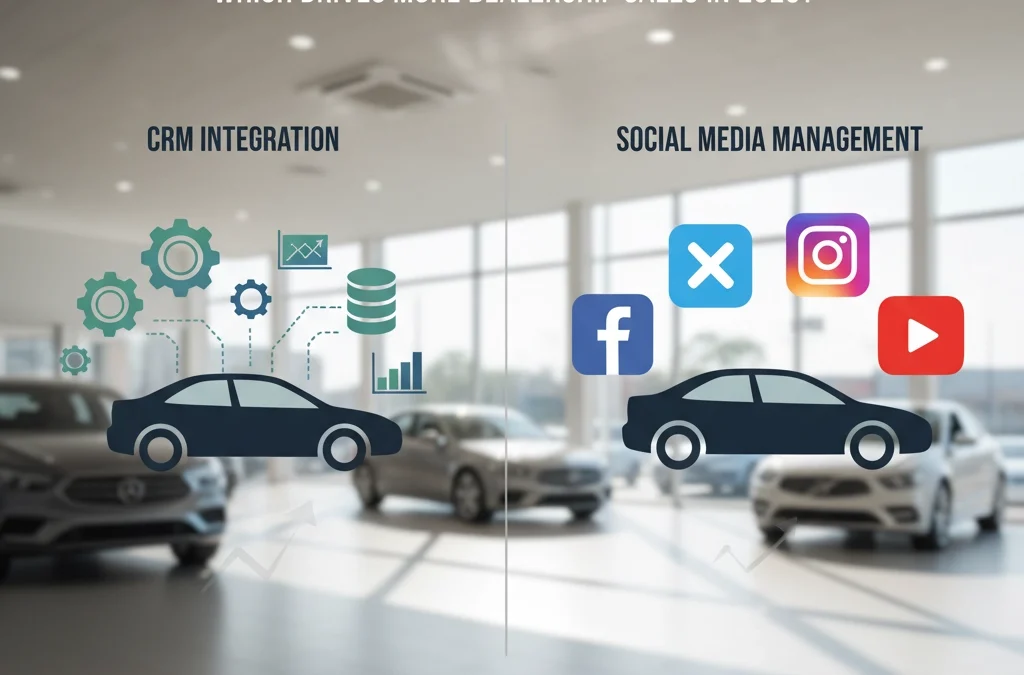
Hello there! If you're in the automotive world: whether you run a dealership, manage a parts distribution center, or operate a repair shop: you've probably wondered which digital tool actually moves the sales needle. Let's break down the real numbers and see what works in 2025.
The short answer? CRM integration wins by a wide margin when it comes to driving actual sales. But social media management still plays an important supporting role. Here's why.
CRM Integration: The Revenue Generator
Customer Relationship Management systems have evolved far beyond simple contact databases. Today's automotive CRM platforms directly impact your bottom line through automation, better lead management, and smarter customer data use.
The Numbers Don't Lie
Real automotive businesses are seeing remarkable results. Hendrick Automotive Group increased their lead conversion rate by 20% and boosted customer appointments by 400% after implementing CRM automation for follow-ups and appointment reminders. Even more impressive, Upstate Automotive Group saw their monthly gross profits jump by 137% following CRM integration.
These aren't small improvements: they're business-changing results that show up directly in revenue reports.

How CRM Drives Sales
Modern automotive CRM systems work around the clock. They respond to online inquiries instantly (crucial since 90% of car buyers start their journey online), automate follow-up sequences that would otherwise fall through the cracks, and identify profitable opportunities like trade-ins through data mining.
The speed factor alone makes CRM integration worth considering. The first business to respond to an online inquiry often gets the sale. Manual processes simply can't compete with automated instant responses.
For automotive businesses involved in community sponsorships: like supporting high school esports programs or driver education initiatives: CRM systems track these relationships and turn community connections into long-term customer relationships.
Social Media Management: The Lead Generator
Social media management serves a different but valuable purpose. It's your front door for brand awareness and initial customer contact, especially with younger buyers who grew up online.
Current State of Social Media in Automotive
About 49% of automotive industry employees report that social media positively impacts their job performance. However, 72% of automotive staff could benefit from additional social media training, suggesting most businesses aren't maximizing this channel yet.
Social media excels at capturing leads through targeted advertising campaigns tied to current inventory. Facebook and Instagram ads can generate substantial lead volumes when properly configured and managed.

Where Social Media Fits
Think of social media as your lead generation engine. It creates awareness, captures initial interest, and feeds prospects into your sales funnel. But those leads still need proper nurturing and management to become actual sales: which is where CRM integration becomes essential.
For automotive businesses sponsoring community programs, social media provides an excellent platform to showcase these partnerships and build local brand recognition.
The Direct Comparison
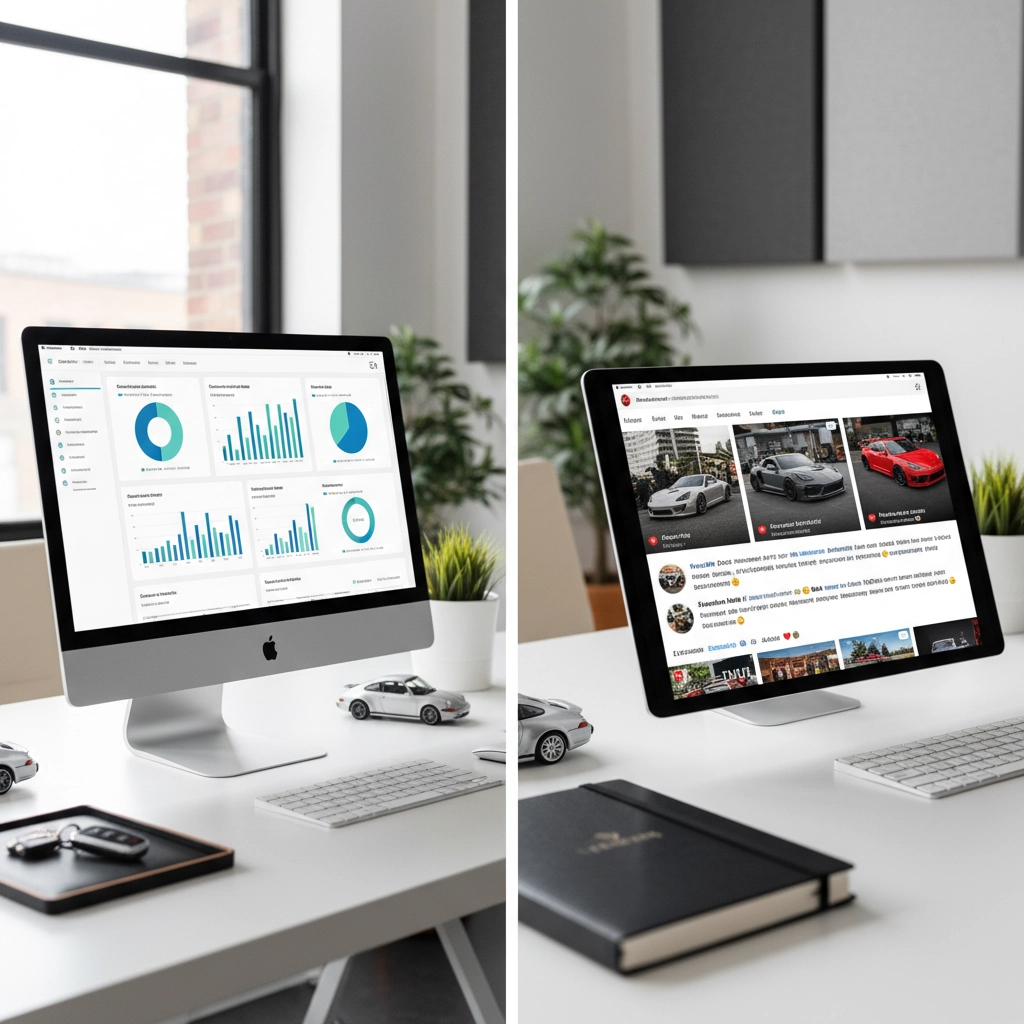
Let's look at how these two approaches stack up across key business metrics:
Sales Impact
CRM integration delivers measurable, direct sales increases. The case studies show concrete revenue growth that you can track month over month. Social media generates leads that require additional nurturing to convert into sales.
Return on Investment
CRM systems provide clear ROI data through improved conversion rates and reduced manual work. Social media ROI is harder to measure directly since leads may convert weeks or months after initial contact.
Automation Level
CRM systems automate entire workflows: from initial contact through final sale and follow-up service reminders. Social media automation is limited to posting schedules and basic engagement.
Staff Requirements
CRM systems require initial training but then reduce daily workload through automation. Social media requires ongoing content creation and engagement, plus most staff need additional training to be effective.
Lead Management
CRM systems handle the complete lead lifecycle from initial contact through repeat business. Social media captures leads but requires other systems to manage them effectively.
Making the Right Choice for Your Business
Start with CRM if you're new to digital marketing. The concrete revenue impact makes it easier to justify the investment and measure success. Once you're seeing results from improved lead management, you can add social media to generate more leads for your optimized system.
Choose social media first if you need immediate lead generation and have limited budget. Just remember you'll need systems in place to properly manage and convert those leads.
Go with both if your budget allows. The most successful automotive businesses use social media to generate leads and CRM systems to convert them efficiently. This combination maximizes both lead volume and conversion rates.

Industry-Specific Considerations
For Dealerships: CRM integration is crucial given the high transaction values and complex sales processes. The automation alone will free up your sales team to focus on closing deals rather than manual follow-ups.
For Parts Distributors: CRM systems help manage relationships with multiple dealer clients and track repeat ordering patterns. Social media can showcase new products and special promotions.
For Repair Shops: CRM systems excel at service reminders and repeat customer management. Social media works well for local community engagement and showcasing work quality.
For Automotive Training Centers: Both tools support community outreach, but CRM systems better manage student relationships and enrollment processes.
The Community Connection
Many automotive businesses are discovering that community involvement: like sponsoring high school esports programs or supporting driver education initiatives: creates lasting customer relationships. CRM systems excel at tracking these community connections and converting them into business relationships over time.
Social media amplifies these community partnerships through shared content and local engagement, while CRM systems ensure you maintain contact with families and students who participate in sponsored programs.

Looking Forward
The automotive industry continues evolving rapidly. Electric vehicles, online sales processes, and changing customer expectations all require businesses to stay connected with customers throughout longer, more complex buying journeys.
CRM integration provides the foundation for managing these evolving relationships effectively. Social media keeps you visible and relevant during the extended research periods that characterize modern automotive purchases.
The Bottom Line
CRM integration drives more dealership sales in 2025 because it directly improves conversion rates and automates revenue-generating activities. Social media management supports this by generating leads and building brand awareness.
If you must choose one, choose CRM integration for its proven revenue impact. The concrete results from businesses like Hendrick Automotive Group and Upstate Automotive Group show that CRM systems deliver measurable sales growth that justifies the investment.
But the most effective approach combines both tools strategically: using social media to generate leads that CRM systems then convert efficiently into sales and long-term customer relationships.
Your customers are online, researching and comparing options. The question isn't whether to invest in digital tools, but which ones will actually grow your business. The evidence clearly points to CRM integration as your primary sales driver, with social media as valuable support.